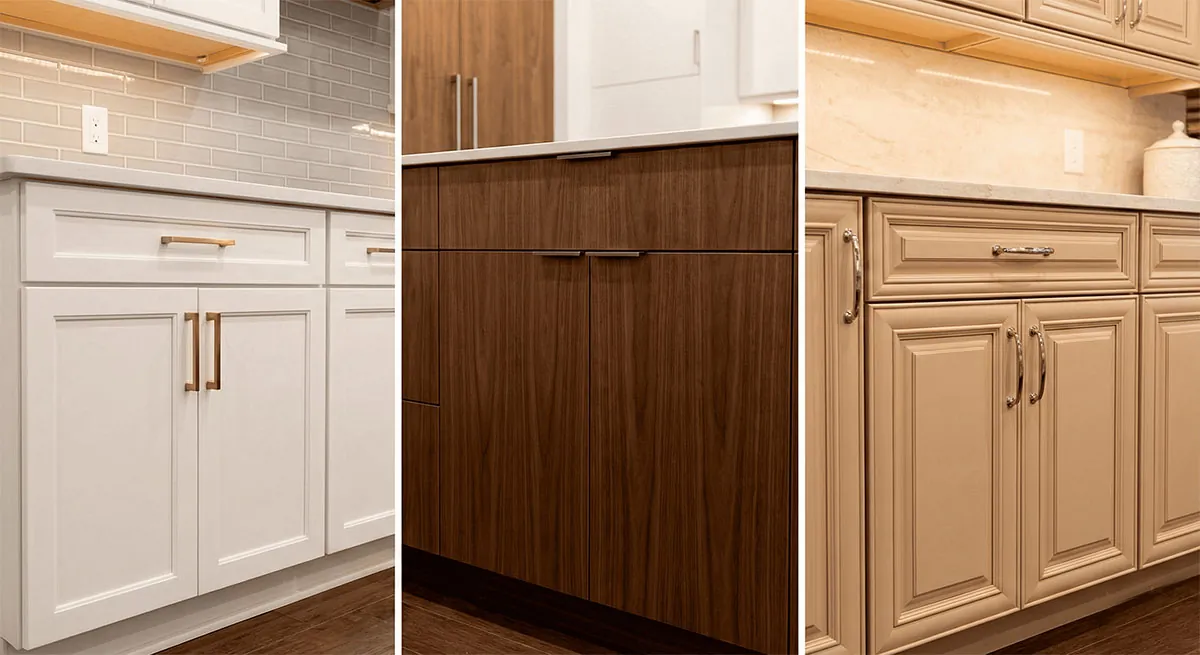
Cabinet doors set the visual tone of your kitchen more than almost any other element. The right door style can make a space feel timeless, modern, traditional or somewhere perfectly in between.
This guide explains the most popular kitchen cabinet door styles: what they look like, where they work best, and how to choose confidently.
Fast decisionQuick comparison
If you want a quick answer, start here. These are the main styles our clients consider, and what each one typically communicates in a finished kitchen.
| Door style | Look & feel | Best for | Notes |
|---|---|---|---|
| Shaker | Clean, framed, timeless | Transitional, modern farmhouse, classic kitchens | Balanced choice; works in nearly any home |
| Slab (flat-panel) | Sleek, minimalist, modern | Contemporary, European-inspired, modern spaces | Great for bold colors and matte finishes |
| Raised panel | Traditional, detailed, dimensional | Classic, formal, luxury traditional kitchens | Pairs well with warm stains and decorative hardware |
| Recessed panel | Subtle depth, refined, versatile | Traditional to transitional | A quieter alternative to raised panel |
| Beadboard | Textured, charming, cottage | Coastal, cottage, casual kitchens | Texture is beautiful, but needs slightly more cleaning attention |
| Glass-front | Light, open, display-ready | Upper cabinets, feature sections | Best as an accent, not usually for every cabinet |
Pro tipChoose your door style first, then select finish and hardware. Reversing the order is a common reason kitchens feel “almost right” but not cohesive.
Style 1Shaker cabinet doors
Shaker doors are defined by a simple five-piece construction: a flat center panel framed by clean, square rails and stiles. The reason Shaker remains the most requested style is simple: it feels classic without being ornate, and modern without feeling cold.
Timeless, versatile kitchens
- Transitional design (a mix of classic and modern)
- Modern farmhouse when paired with warm woods
- Bright kitchens with painted finishes
Details that matter
- Frame width changes the “weight” of the style
- Works beautifully with both knobs and pulls
- Pairs well with quartz, marble-look and wood countertops
If you want a kitchen that still looks “right” ten years from now, Shaker is almost always a safe and high-end choice.
Style 2Slab (flat-panel) cabinet doors
Slab doors are exactly what they sound like: a flat, unframed panel with a clean, uninterrupted face. This style is the cornerstone of modern and European-inspired kitchens because it emphasizes lines, geometry and simplicity.
Best visual pairingSlab doors look exceptional with integrated pulls, edge pulls or long bar pulls, especially in brushed finishes.
Slab doors are ideal when you want the cabinetry to feel seamless and architectural. They also allow color and finish to take center stage: matte whites, deep charcoals, warm taupes and natural wood veneers all perform beautifully here.
When slab doors make the most sense
- You want a modern, clean-lined kitchen with minimal visual noise
- You prefer strong symmetry and a “built-in” look
- You are using statement materials (waterfall countertops, bold stone, etc.)
Style 3Raised panel cabinet doors
Raised panel doors feature a center panel that is elevated and profiled, creating depth and shadow. This is the style most associated with traditional, formal kitchens, especially when combined with warm stains, decorative moldings and classic hardware.
Raised panel doors are a strong choice if your home leans traditional, if you want the cabinetry to feel more “furniture-like,” or if you are aiming for a luxury classic aesthetic.
Best for
- Traditional kitchens and elegant, detailed interiors
- Homes with classic trim work, wainscoting or crown molding
- Warm wood tones and richer finishes
Design noteRaised panel can feel heavy in very small kitchens. If you want a classic look but a lighter feel, consider recessed panel or a narrower-profile Shaker.
Style 4Recessed panel cabinet doors
Recessed panel doors have a framed construction, like Shaker, but the inner panel sits back (recessed) and may include subtle profiling. It is a refined, traditional-leaning option that does not demand as much attention as raised panel.
Why homeowners choose recessed panel
- A classic look with less ornamentation than raised panel
- Works beautifully in transitional kitchens
- Pairs well with both painted and stained finishes
Style 5Beadboard cabinet doors
Beadboard doors feature vertical grooves that add texture and a relaxed, welcoming personality. This style is popular in coastal, cottage and casual kitchens, especially as an accent on islands or pantry sections.
Best uses
- Kitchen islands as a feature element
- Butler’s pantries or beverage areas
- Coastal and cottage kitchens with lighter palettes
Maintenance tipTextured doors can collect more dust in the grooves. Regular light cleaning keeps them looking sharp.
Style 6Glass-front cabinet doors
Glass-front doors bring openness and depth to a kitchen, and they are excellent for display and visual balance. Most designers treat glass-fronts as an accent, used strategically rather than everywhere.
Where glass-fronts work best
- Upper cabinets to break up solid cabinetry
- Symmetrical “bookends” near a range hood
- Bar areas, coffee stations and specialty zones
For a premium result, consider interior lighting and consistent styling (simple, matching dishware or decor) so the look stays clean rather than cluttered.
Four stepsHow to choose the right door style
- Match your home’s architectureModern homes typically favor slab or narrow Shaker. Traditional homes often look best with raised or recessed panels. Transitional homes can go either direction: Shaker is the bridge.
- Decide what should be the “star”If your countertops or backsplash are bold, choose a quieter door (Shaker or slab). If you want cabinetry to be the statement, consider raised panel, beadboard accents or elevated hardware.
- Choose finish and hardware to complete the lookShaker pairs with almost anything. Slab loves modern pulls or integrated channels. Raised panel benefits from classic knobs and pulls and warm finishes.
- Consider durability and daily useAll styles can be durable when built well. What changes is how they show wear. Textures and profiles can hide small marks; ultra-flat surfaces highlight fingerprints more, depending on the finish.
Simple ruleIf you are torn between two styles, choose the one that aligns with the architecture of the home and your long-term taste, then elevate it with hardware, lighting and a premium finish.
QuestionsFAQ
01What is the most popular cabinet door style?
Shaker is consistently the most popular because it is versatile and timeless. It works across modern, transitional and classic kitchens with the right finish and hardware.
02Are slab doors harder to keep clean?
Not necessarily: cleaning is simple because there are no grooves. However, certain finishes may show fingerprints more. Choosing a quality, durable finish helps a lot.
03Can I mix door styles in the same kitchen?
Yes. Mixing can look high-end when done intentionally. A common approach is solid doors for most cabinetry, with glass-front uppers or beadboard accents on an island.
04How do I make a traditional door style feel more modern?
Use lighter paint colors, simplify molding and choose modern hardware. Recessed panel is a great “traditional but refined” option that transitions well.